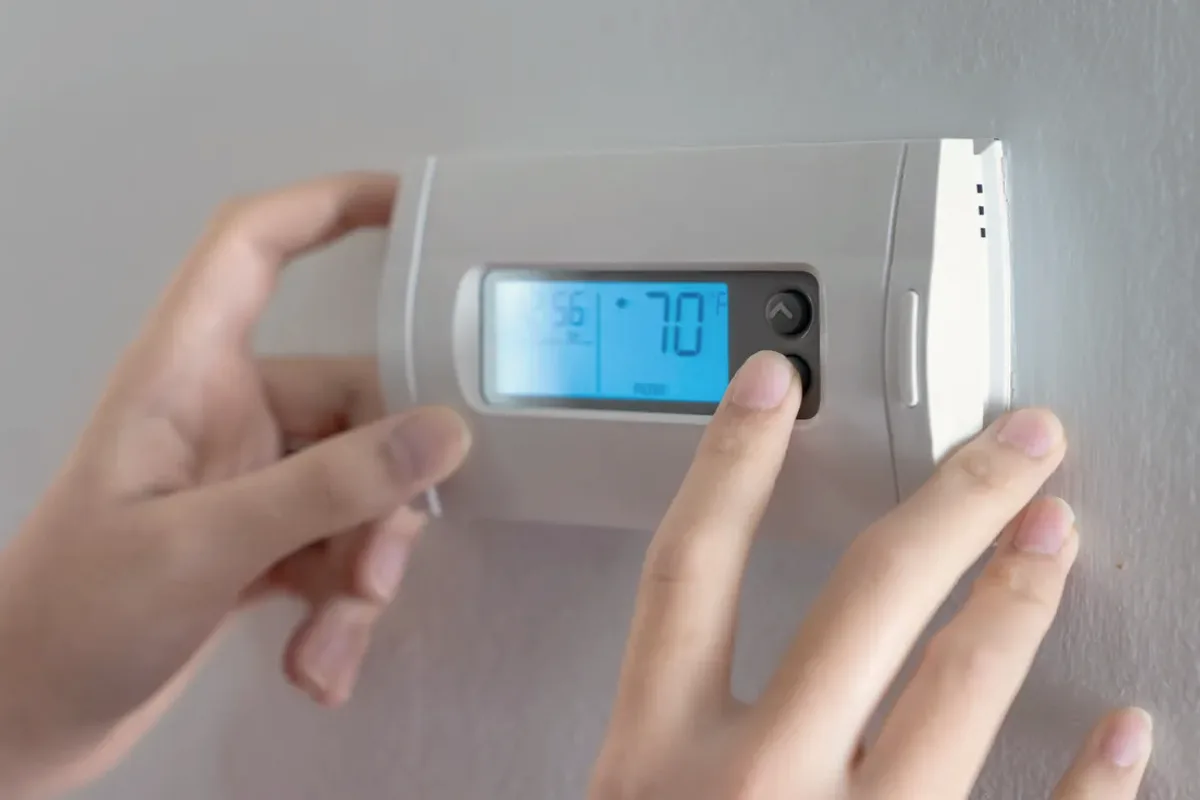
Request thermostat repair & replacement for a property in Woodstock. Include the equipment, the problem or planned work, and your location so the request can be reviewed.
How do you determine whether a thermostat needs repair or replacement and whether a new model is compatible?
A thermostat that has a blank display, reads inaccurately, or causes frequent system starts may have a control fault, but the connected heating or cooling equipment can also be involved. Repair and replacement are distinct options. Before choosing a new basic, programmable, or smart model, identify the furnace or heat pump, its stages, wiring, and control functions. Compatibility matters because a thermostat that cannot support the system’s configuration may not operate it as intended.
Assessment should compare the thermostat’s displayed reading and call for heat or cooling with the connected system’s response. Wiring, power, configuration, and equipment staging can distinguish a thermostat fault from a furnace or heat pump issue. For replacement, the system model and control requirements determine compatible options, including whether a programmable or smart thermostat can use the functions the homeowner wants.
Thermostat display, temperature, and short-cycling diagnosis
Compatibility with staged furnaces and heat pumps
Repair or replacement with basic, programmable, or smart controls
Assessment and Scope
Questions for the Proposed Work
01
Trace blank screens and incorrect readings
A blank display or inaccurate temperature may relate to the thermostat, its power supply, wiring, setup, or the connected equipment. A short-cycling complaint also needs comparison between thermostat calls and system operation before the control is blamed. Those observations help establish whether repair is appropriate or whether another HVAC component is interrupting operation. Internal wiring and electrical checks should be handled by a qualified service provider.
02
Check compatibility before selecting a replacement
Thermostats differ in the equipment and control stages they support. A two-stage furnace and a heat pump may require different terminals or settings, and some systems use controls that a basic replacement cannot manage. Confirming the existing model, wiring configuration, and equipment functions helps narrow suitable options. This avoids choosing a thermostat based only on features such as a touchscreen or remote access.
03
Choose features to suit the connected system
Programmable and smart thermostats offer different scheduling and control functions, but those features are useful only when compatible with the HVAC equipment and the household’s intended use. A replacement may require configuration for heating stages, cooling, or heat-pump operation. If the current thermostat is otherwise compatible and the fault is repairable, replacement is not automatic; inspection findings and the homeowner’s requested features inform the choice.
Compare the next step
Compare sensor readings with temperatures in the rooms that matter to occupants. Ask whether sensing, zoning, distribution, or the room envelope explains the difference. A replacement control proposal should identify what it can change and what needs other work rather than promise identical room temperatures from a new display.
Thermostat wiring is not universal. Do not connect wires by colour alone or work on energized wiring; a compatible control must be configured for the equipment it serves.